
Small Daily Reinforcement: The 1% Shift That Compounds
Dramatic change is overrated. Small consistent shifts in thinking, repeated daily, create transformation that lasts.
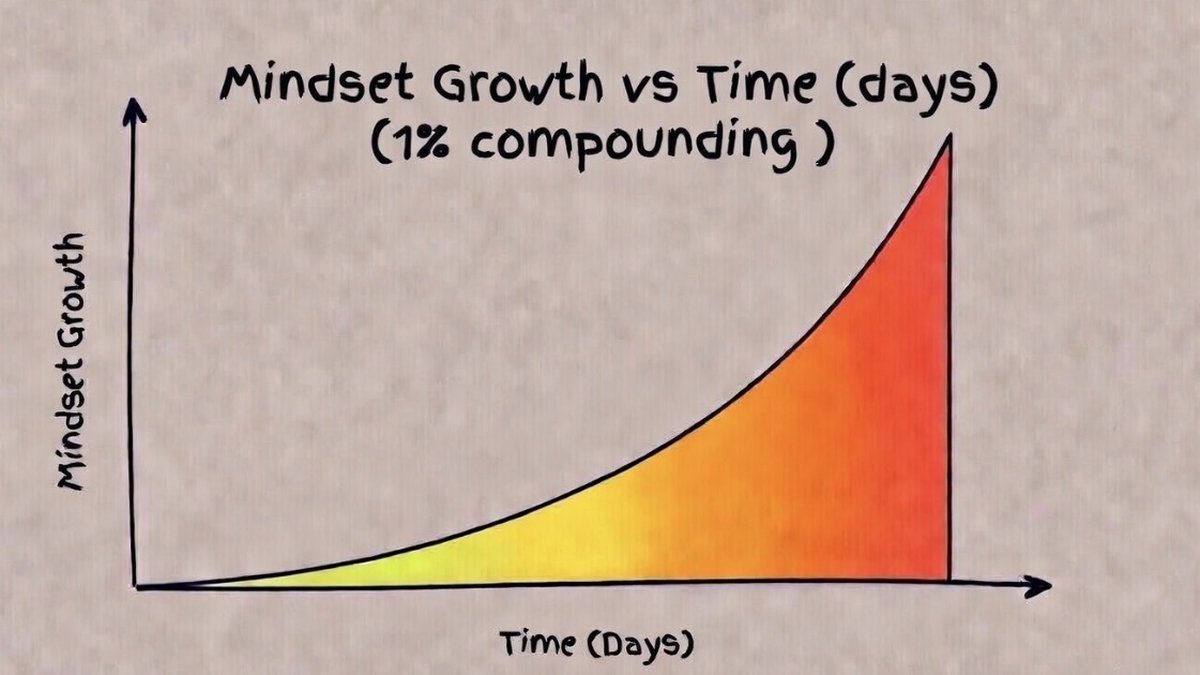
We overvalue dramatic transformation and undervalue small consistent shifts.
The fantasy is appealing: one breakthrough moment that changes everything. A single insight that rewires your thinking. A dramatic before and after.
Reality works differently. Lasting change in how you think happens gradually, through small reinforcements that compound over time.
The Compound Effect in Thinking
You've likely heard about compound interest in finance. Small amounts, consistently invested, grow exponentially over time.
The same principle applies to beliefs.
A single thought has minimal impact. But that same thought, reinforced daily, builds momentum. Research in Nature Reviews Neuroscience confirms that spaced repetition over time produces significantly more robust neural encoding than massed, intensive sessions - small consistent inputs outperform large irregular ones. Over weeks and months, it shifts from "something I'm trying to think" to "how I actually think."
This is the 1% shift: a small adjustment in attention or belief, repeated until it becomes automatic.
Why Small Beats Dramatic
Dramatic changes fail for predictable reasons:
They require unsustainable energy. Maintaining intensity is exhausting. Eventually you return to baseline.
They trigger resistance. Big shifts feel threatening to your existing identity. Your mind pushes back.
They lack infrastructure. Without systems to support them, dramatic insights fade into memory.
Small shifts avoid these problems:
They require minimal energy. Two minutes of attention is sustainable indefinitely.
They slip past resistance. Small enough to feel unthreatening. Your identity doesn't fight back.
They build their own infrastructure. Each repetition strengthens the pathway, making the next repetition easier.
What 1% Actually Looks Like
A 1% shift isn't noticeable day to day. That's precisely why it works.
In practice, it might look like:
Returning to a single statement each morning. The same words. Taking thirty seconds to connect with the meaning before moving on.
Noticing one moment during the day when the statement feels relevant. Not forcing it. Just noticing.
Returning again in the evening. Same words. Brief attention. Then sleep.
No dramatic journaling sessions. No vision boards. No emotional breakthroughs required.
Just quiet, consistent return to what you want to reinforce.
The Math of Accumulation
Consider the numbers:
One repetition per day for 30 days = 30 repetitions. Two repetitions per day (morning and evening) for 30 days = 60 repetitions. Two repetitions per day for 90 days = 180 repetitions.
A belief you've engaged with 180 times occupies different mental territory than one you've thought about a few times.
The repetition count matters less than the consistency. But the accumulation is what creates the shift.
How Change Actually Feels
People expect to feel different when beliefs change. They look for a moment of transformation.
Usually, it's subtler than that.
You notice you responded to a situation differently than you would have before. You catch yourself thinking something that aligns with what you've been reinforcing. Someone else points out a change you hadn't fully registered.
The shift happened gradually. You didn't notice the individual 1% adjustments. But they accumulated into something real.
This is normal. It's how durable change works.
The Patience Requirement
Small daily reinforcement requires patience. You're playing a longer game than dramatic transformation promises.
For the first week, nothing seems different. You're repeating words that may or may not feel true.
By week two or three, familiarity develops. The words feel less foreign.
By week four and beyond, the statement begins integrating. It shows up in your thinking without effort.
This timeline doesn't fit the instant gratification pattern. But it produces results that last.
Practical Implementation
To apply the 1% principle:
Choose one belief to reinforce. Not five. One. Depth beats breadth.
Make it specific. "I approach challenges with curiosity" is better than "I am positive."
Create a structure. Morning and evening. Same time. Attached to existing habits.
Keep it brief. Two minutes is enough. Sustainability matters more than duration.
Commit to a timeframe. Seven days minimum. Thirty days for deeper integration.
Trust the process. The early days feel insignificant. They're not.
Why Structure Helps
Left to chance, small daily reinforcement doesn't happen. Life intervenes. You forget. Other priorities take over.
Structure solves this. A defined practice removes the decision each day. You don't ask "should I do this today?" You've already decided.
This is why ritual formats work. The 7-Day commitment, morning and evening, provides structure that carries you through low-motivation days.
The structure isn't the point. The accumulated reinforcement is. But structure makes accumulation possible.
The Long View
Small daily reinforcement is an investment in your future self.
The you of three months from now will think differently because of the small shifts you make today. Not because of one dramatic session, but because of consistent, quiet return to what matters.
This requires trusting a process you can't see working in real time. The compound effect is invisible until it's not.
But the math is reliable. Small consistent inputs create large eventual outputs.
The Bottom Line
Dramatic transformation is overrated. Small daily reinforcement is underrated.
A 1% shift, repeated consistently, compounds into genuine change. Not overnight. Over time.
The question isn't "how do I transform my thinking?" It's "what will I reinforce today?"
Explore structured repetition in Muselii
A quiet daily practice for shaping the beliefs you want to live by.
Download Free